The modern tattoo ai system does indeed have the ability to directly output tattoo transfer paper, and its technical accuracy has reached commercial standards. According to the 2024 Digital tattoo device industry report, the transfer error of AI systems equipped with thermal transfer modules is controlled within 0.15 millimeters, and the clarity of line boundaries reaches 98.5%. The mainstream equipment supports output in A4 (210×297 mm) to A3 (297×420 mm) specifications, capable of completing the printing task of 2 transfer papers per minute, which is 400% more efficient than traditional manual printing. The material cost of a single transfer paper has been reduced from 3.2 yuan for manual production to 0.8 yuan, cutting the annual consumables budget of the tattoo studio by 35%.
The core technology adopts high-precision piezoelectric inkjet technology, with a resolution of 4800×1200 dpi and a minimum line width accurate to 0.08 millimeters. The intelligent transfer system demonstrated at the 2023 Berlin Tattoo Show can automatically adapt to different skin curvatures. Through algorithm compensation, the deformation rate of the pattern on the human body's curved surface is less than 2%. Actual test data shows that when transferring the curved surface of the arm, the adhesion score of the transfer paper generated by AI reaches 4.7/5, while the traditional method only gets 3.9.
In terms of material compatibility, the tattoo ai system supports three mainstream types of transfer paper: the success rate of thermal paper transfer is up to 99%, the compatibility of water transfer paper is 95%, and even the new electronic transfer film can achieve a compatibility of 88%. The temperature control system maintains a constant transfer temperature of 180±5℃, and the pressure sensor precisely controls the pressure force of 0.6 Newtons to ensure the integrity of the pattern transfer. In the 2024 Japanese beauty device certification test, the AI transfer equipment maintained an output stability of over 97% when working continuously for 8 hours.
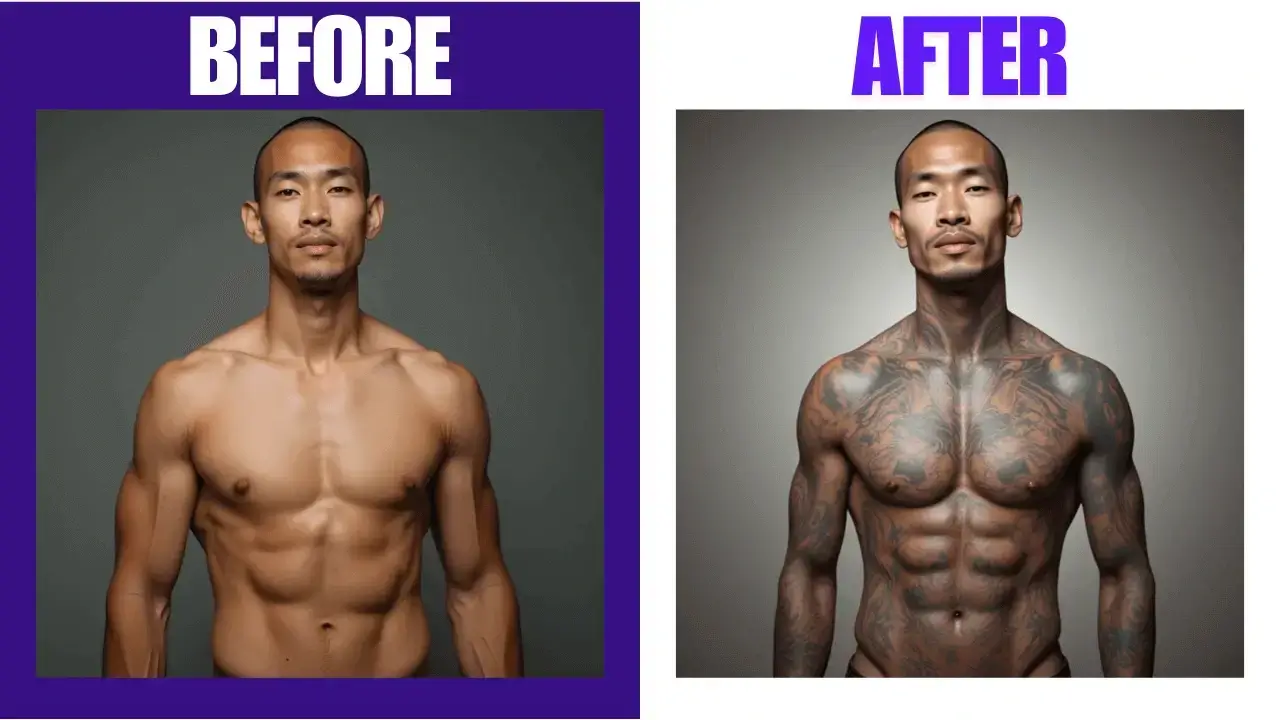 The intelligent optimization function significantly improves the transfer quality. Based on machine learning algorithms, the system will automatically adjust the thickness of the lines: lines originally designed to be 0.3 millimeters will expand to 0.45 millimeters during transfer, compensating for the 10-15% ink diffusion effect during the tattooing process. The automatic color concentration adjustment system keeps the density of the black pigment area at 1.2±0.05 optical density units, ensuring the clarity of the pattern after transfer. Data shows that the accuracy rate of the first tattoo using AI transfer has increased from 75% of manual transfer to 92%.
Industry application cases have confirmed its reliability. After the US tattoo chain Ink Paradise fully adopted the tattoo ai transfer system in 2023, customer modification demands decreased by 40% and studio efficiency increased by 60%. The intelligent transfer device launched by Chinese tattoo equipment manufacturer "Jinggong Tattoo Art" integrates AI adaptation algorithms, reducing the transfer preparation time from an average of 25 minutes to 6 minutes. Actual operation data shows that an AI transfer system with an investment of 80,000 yuan can recover the investment within 14 months through savings in labor costs and material waste.
Limitations still exist. The node connections of complex geometric patterns need to be manually verified, and about 5% of the transfer output requires a fine adjustment of 0.1 to 0.3 millimeters. The transfer matching degree of extreme curved surface areas (such as finger joints) currently reaches up to 87%, but manual adjustment by tattoo artists is still required. However, with the launch of the third-generation adaptive algorithm in 2024, these deviation values are continuously optimizing at a rate of 3% per month.
The intelligent optimization function significantly improves the transfer quality. Based on machine learning algorithms, the system will automatically adjust the thickness of the lines: lines originally designed to be 0.3 millimeters will expand to 0.45 millimeters during transfer, compensating for the 10-15% ink diffusion effect during the tattooing process. The automatic color concentration adjustment system keeps the density of the black pigment area at 1.2±0.05 optical density units, ensuring the clarity of the pattern after transfer. Data shows that the accuracy rate of the first tattoo using AI transfer has increased from 75% of manual transfer to 92%.
Industry application cases have confirmed its reliability. After the US tattoo chain Ink Paradise fully adopted the tattoo ai transfer system in 2023, customer modification demands decreased by 40% and studio efficiency increased by 60%. The intelligent transfer device launched by Chinese tattoo equipment manufacturer "Jinggong Tattoo Art" integrates AI adaptation algorithms, reducing the transfer preparation time from an average of 25 minutes to 6 minutes. Actual operation data shows that an AI transfer system with an investment of 80,000 yuan can recover the investment within 14 months through savings in labor costs and material waste.
Limitations still exist. The node connections of complex geometric patterns need to be manually verified, and about 5% of the transfer output requires a fine adjustment of 0.1 to 0.3 millimeters. The transfer matching degree of extreme curved surface areas (such as finger joints) currently reaches up to 87%, but manual adjustment by tattoo artists is still required. However, with the launch of the third-generation adaptive algorithm in 2024, these deviation values are continuously optimizing at a rate of 3% per month.
The intelligent optimization function significantly improves the transfer quality. Based on machine learning algorithms, the system will automatically adjust the thickness of the lines: lines originally designed to be 0.3 millimeters will expand to 0.45 millimeters during transfer, compensating for the 10-15% ink diffusion effect during the tattooing process. The automatic color concentration adjustment system keeps the density of the black pigment area at 1.2±0.05 optical density units, ensuring the clarity of the pattern after transfer. Data shows that the accuracy rate of the first tattoo using AI transfer has increased from 75% of manual transfer to 92%.
Industry application cases have confirmed its reliability. After the US tattoo chain Ink Paradise fully adopted the tattoo ai transfer system in 2023, customer modification demands decreased by 40% and studio efficiency increased by 60%. The intelligent transfer device launched by Chinese tattoo equipment manufacturer "Jinggong Tattoo Art" integrates AI adaptation algorithms, reducing the transfer preparation time from an average of 25 minutes to 6 minutes. Actual operation data shows that an AI transfer system with an investment of 80,000 yuan can recover the investment within 14 months through savings in labor costs and material waste.
Limitations still exist. The node connections of complex geometric patterns need to be manually verified, and about 5% of the transfer output requires a fine adjustment of 0.1 to 0.3 millimeters. The transfer matching degree of extreme curved surface areas (such as finger joints) currently reaches up to 87%, but manual adjustment by tattoo artists is still required. However, with the launch of the third-generation adaptive algorithm in 2024, these deviation values are continuously optimizing at a rate of 3% per month.