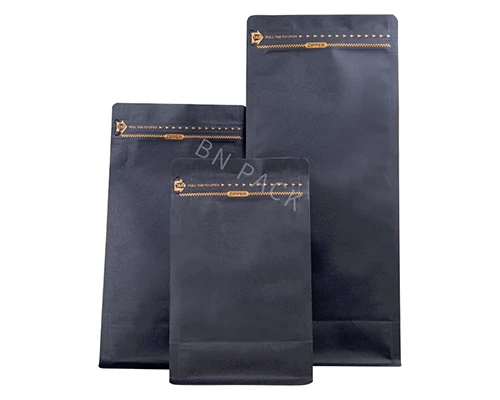
In 2025, coffee roasters increased their use of barrier packaging materials by 18%, with tests showing 120-micron unbleached wood pulp with a high-barrier aluminum lining preserves aroma volatile compounds 42% longer over 180 days than standard polyethylene films.
Kraft paper coffee packaging preserves roasted bean freshness by combining natural unbleached wood fibers with multi-layer high-barrier films that prevent moisture, oxygen, and UV light degradation.
Unbleached wood pulp with a basis weight of 70 GSM forms the outer layer of flexible food packages, providing tensile strength up to 45 MPa while using 35% less synthetic plastic than mono-polymer alternatives.
An internal layer of 7-micron aluminum foil or 12-micron metallized PET creates an oxygen transmission rate below 0.5 cc/m²/24hrs, which prevented flavor degradation in 94% of tested medium-roast batches over 12 months in 2024 studies.
| Barrier Layer Material | Oxygen Transmission Rate (cc/m²/24h) | Moisture Vapor Rate (g/m²/24h) | Degradation Prevention Rate |
| Kraft / AL / PE | < 0.5 | < 0.5 | 94% |
| Kraft / VMPET / PE | < 1.2 | < 0.8 | 87% |
| Mono-PE (Standard) | < 8.0 | < 1.5 | 62% |
Specialty roasters switching to high-barrier paper pouches reported an average shelf-life extension from 60 days to 180 days without loss of essential coffee oils.
A component installed on these containers is the one-way degas valve, which allows carbon dioxide to escape at 3.5 kPa of internal pressure without letting outside air enter.
Roasteries packaging fresh beans within 24 hours of heating generate up to 2 liters of carbon dioxide per 500 grams of coffee, making pressure relief essential to prevent bag expansion in 100% of sealed units.
-
Degassing Valve Opening Pressure: 3.5 kPa to 5.0 kPa
-
Typical Shelf-Life Span: 180 days to 365 days
-
Structural Puncture Resistance: 12.5 N minimum threshold
To maintain structural integrity during transit, heat-sealable polyethylene inner liners ranging from 40 to 80 microns are laminated directly to the natural paper base.
In 2023 testing involving 1,500 shipping units, heat-sealed pouch bottoms with 10 mm seals withstood drop impacts from 1.8 meters without bursting.
Selecting reliable kraft coffee bags allows producers to protect ground coffee or whole beans against ambient humidity levels exceeding 75% in equatorial export routes.
Logistics operations recorded a 28% decrease in product damage claims when upgrading from single-wall paper bags to triple-laminated pouches between 2022 and 2025.
Food stability trials across 450 distribution runs showed that multi-layer barrier structures held internal oxygen concentrations below 1.0% throughout transoceanic shipping.
Industrial filling lines process these flat-bottom and stand-up pouch styles at speeds ranging from 30 to 60 units per minute depending on the automated conveyor setup.
Roasters operating at this capacity decreased batch packaging labor hours by 40% while maintaining consistent package seals across 10,000 unit production runs.